What are MOPP+VMPET+PE materials?
What are MOPP+VMPET+PE materials?
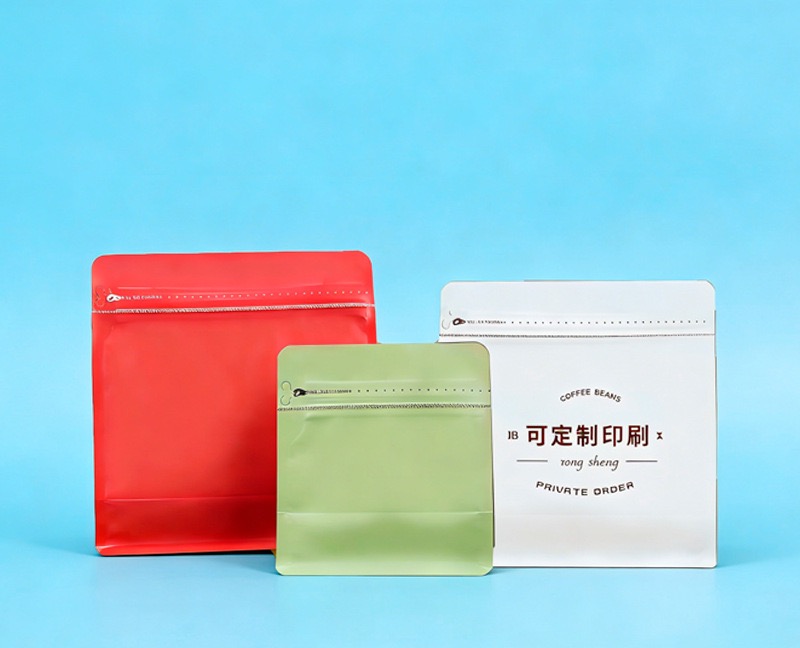
MOPP+VMPET+PE is a very common three-layer composite film structure in the flexible packaging industry, typically used for stand-up pouches for coffee beans, tea, pet food, snacks, and other items requiring light and moisture protection. Each of the three layers has a specific function, from the outside in:
I. MOPP (Outer Layer)
Full name: Monoaxially Oriented Polypropylene film.
Core characteristics: Stretched only in one direction (longitudinal), resulting in extremely high longitudinal strength and tear resistance, while being easy to tear laterally with a straight tear – this is why it’s often used for the “easy-tear strips” on cigarette and pharmaceutical packaging.
Advantages as an outer layer: Stiff, highly transparent, dimensionally stable and not easily deformed, providing a good structural framework for the bag, and also serving as the primary printing substrate.
Common variant: Matte MOPP has a natural matte finish, similar to paper, achieving a high-end look without the need for a matte lamination.
II. VMPET (Intermediate Layer)
Full name: Vacuum Metallized Polyethylene Terephthalate. This is a vacuum-metallized polyester film.
The manufacturing process involves heating and evaporating high-purity aluminum in a high-vacuum environment, allowing an extremely thin aluminum layer to be evenly deposited on the surface of a PET substrate. One side has a bright silver metallic sheen, while the other side is transparent PET.
High Barrier: Its ability to block oxygen, moisture, and ultraviolet rays is second only to pure aluminum foil, far superior to ordinary plastic films, effectively preventing coffee oils from oxidizing and developing a bad flavor.
Light Blocking: Completely blocks light, suitable for light-sensitive products such as coffee, tea, milk powder, and potato chips.
Metallic Texture: It has a high-end metallic luster, resulting in a high-quality packaging appearance after printing, while costing only 1/2–1/3 of pure aluminum foil.
III. PE (Inner Layer)
Full name: Polyethylene. This is the layer closest to the contents of the three layers.
Food-Grade Safety: Non-toxic and odorless, meeting FDA and EU food contact standards, safe even for direct contact with coffee beans and tea leaves.
Excellent heat-sealing performance: During bag manufacturing, the PE layers on both sides melt and bond together under heat, forming a strong airtight seal—its primary function as the inner layer.
Low-temperature and moisture resistance: It remains flexible at low temperatures and offers good water vapor barrier properties, making it suitable for moisture-proof packaging.
Weakness: It has relatively weak barrier properties against non-polar gases (oxygen, nitrogen), which is why the intermediate VMPET layer is needed to compensate.
In short, remember this combination: MOPP ensures “good looks, a crisp appearance, and easy printing,” VMPET provides “light-blocking, oxygen-barrier, and flavor preservation,” and PE ensures “food contact and heat sealing”—these three layers combined create a classic packaging bag structure that balances aesthetics and shelf life.
Leave your comment
Related posts